

Are stainless steel belts suitable for low - temperature environments?
Jul 31, 2025
Yo, folks! As a supplier of stainless steel belts, I often get asked if these belts are suitable for low - temperature environments. Well, let's dig into this topic and find out.
First off, let's talk about what stainless steel belts are. They're super versatile and are used in a bunch of industries, from food processing to manufacturing. You can check out our Precision Endless Steel Belts for some high - quality options.
When it comes to low - temperature environments, there are a few factors we need to consider. One of the main things is the material properties of stainless steel. Stainless steel is an alloy, and different grades have different characteristics. Some common grades used for belts are 304 and 316.
304 stainless steel is pretty popular. It has good corrosion resistance and is relatively affordable. But how does it perform in the cold? Well, at low temperatures, the ductility of 304 stainless steel can decrease. Ductility is the ability of a material to deform without breaking. When it gets really cold, 304 might become a bit brittle. This means that if there's a sudden impact or stress on the belt, it could crack or break more easily.

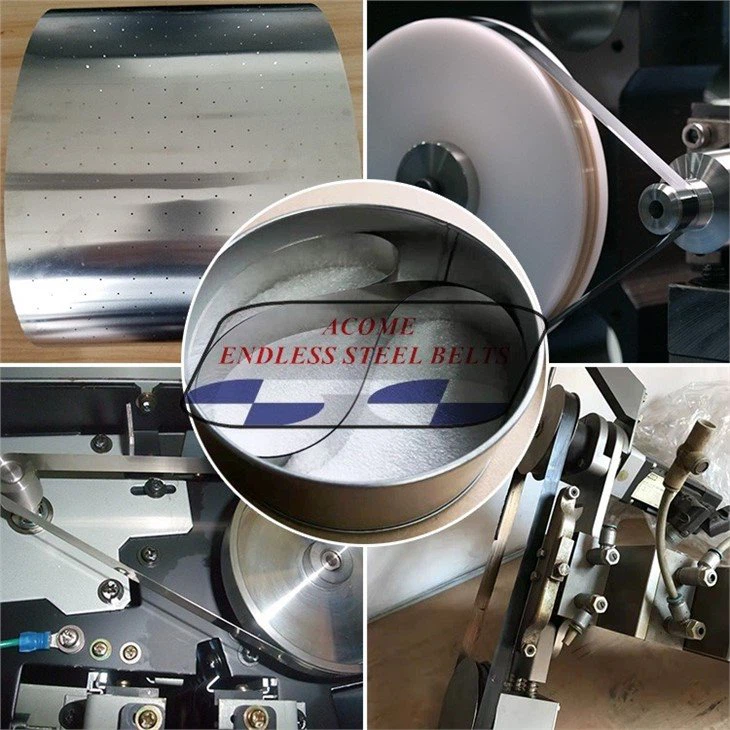
On the other hand, 316 stainless steel is known for its better corrosion resistance, especially in environments where there might be exposure to chemicals or saltwater. In low - temperature situations, 316 generally retains its ductility better than 304. So, if you're working in a cold and corrosive environment, 316 might be a better choice for your stainless steel belt.
Another thing to think about is the design of the belt. Our High Temperature Resistant Endless Steel Belts are designed to handle extreme conditions, and this design can also play a role in low - temperature performance. A well - designed belt will have proper tensioning and flexibility built in. This helps to distribute stress evenly across the belt, reducing the risk of damage in cold temperatures.
For example, if a belt is too tight, the stress concentration at the edges or joints can be higher. In a low - temperature environment, this can make the belt more prone to failure. So, it's crucial to make sure the belt is installed and adjusted correctly.
Now, let's talk about the manufacturing process. Our Welded Endless Steel Belts are made with precision welding techniques. The quality of the weld is really important, especially in low - temperature applications. A poor weld can create weak points in the belt. In the cold, these weak points can become even more vulnerable. A good weld should have a consistent structure and be free of defects like porosity or cracks.
In some low - temperature industries, like the cryogenic sector, special grades of stainless steel are used. These grades are specifically engineered to maintain their mechanical properties at extremely low temperatures. They might have a different chemical composition or undergo special heat - treatment processes.
But what about the cost? Using a special grade of stainless steel for low - temperature applications can be more expensive. You've got to balance the cost with the performance requirements. If the belt is going to be in a cold environment for only a short time or the loads are relatively light, a standard grade like 304 might be sufficient. But if it's a long - term, high - stress application in a very cold place, investing in a more suitable grade could save you money in the long run by reducing the risk of belt failure and downtime.
Let's also consider the maintenance of stainless steel belts in low - temperature environments. Cold temperatures can affect the lubrication of the belt. If the lubricant freezes or thickens, it can cause increased friction between the belt and the pulleys. This can lead to premature wear and tear. So, using a lubricant that's suitable for low temperatures is essential.
Regular inspections are also a must. In the cold, small cracks or damages might not be as obvious as they would be at room temperature. But these small issues can quickly turn into major problems. By inspecting the belt regularly, you can catch any potential issues early and take corrective action.
In conclusion, stainless steel belts can be suitable for low - temperature environments, but it depends on a few things. The grade of stainless steel, the design of the belt, the manufacturing process, and the maintenance all play important roles. If you're in a situation where you need a stainless steel belt for a low - temperature application, we're here to help. We can provide you with the right advice and the best - quality belts for your needs.
If you're interested in purchasing stainless steel belts for your low - temperature projects or just want to learn more, feel free to reach out and start a conversation. We're always happy to discuss your requirements and find the perfect solution for you.
References:
- "Metallurgy of Stainless Steels" by ASM International
- "Mechanical Properties of Metals at Low Temperatures" by John Wiley & Sons