

Can precision steel belts be used in aerospace industry?
Jul 30, 2025
As a supplier of precision steel belts, I've often been asked about the potential applications of our products in the aerospace industry. The aerospace sector is known for its high - standards, strict regulations, and the need for materials that can withstand extreme conditions. In this blog, I'll explore whether precision steel belts can be used in the aerospace industry, considering various aspects such as performance requirements, advantages, and potential challenges.
Performance Requirements in the Aerospace Industry
The aerospace industry has a set of unique performance requirements. Components used in aircraft and spacecraft must be able to operate in environments with extreme temperatures, high pressures, and corrosive substances. For example, in the engine compartment of an aircraft, temperatures can reach several hundred degrees Celsius, and the materials need to maintain their structural integrity and mechanical properties.
Moreover, precision is of utmost importance. Any small deviation in the performance of a component can lead to significant safety risks. Whether it's in the control systems, navigation equipment, or the structural parts of the aircraft, the components need to have high precision and reliability.
Advantages of Precision Steel Belts in the Aerospace Industry
1. High Strength and Durability
Precision steel belts are known for their high strength. They can withstand heavy loads and stresses, which is crucial in aerospace applications. For instance, in the landing gear systems of aircraft, where large forces are exerted during take - off and landing, steel belts can provide the necessary strength to ensure the safe operation of the aircraft. Their durability also means that they can have a long service life, reducing the need for frequent replacements and maintenance, which is highly desirable in the aerospace industry to minimize downtime.

2. Precision and Consistency
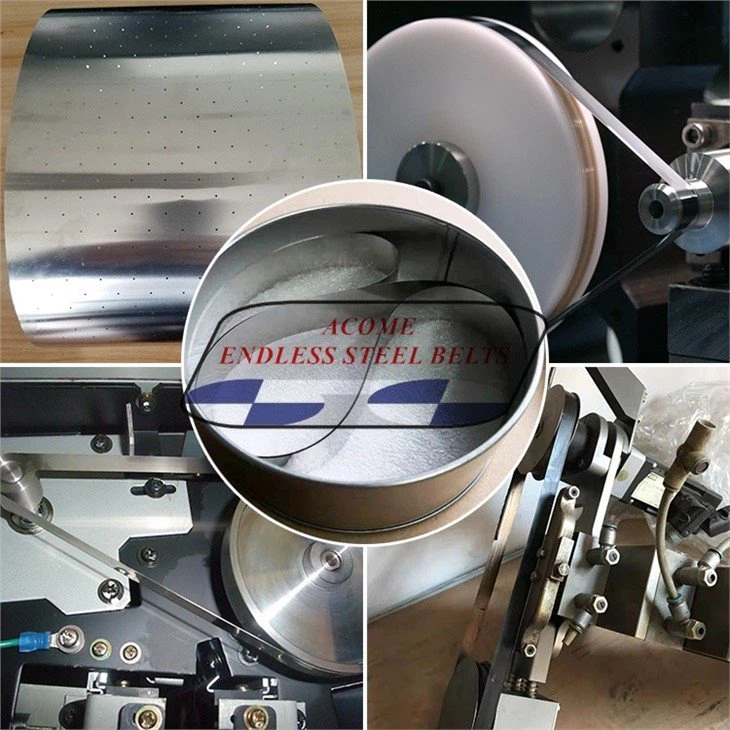
As the name suggests, precision steel belts are manufactured with high precision. They have consistent dimensions and properties throughout the length of the belt. This precision is essential in aerospace applications, such as in the transmission systems of aircraft. A small error in the belt's dimensions can cause misalignment, leading to inefficiencies or even failures in the system. Our Precision Endless Steel Belts are designed to meet the strictest precision requirements, ensuring smooth and reliable operation in aerospace equipment.
3. Resistance to Extreme Conditions
Many aerospace operations involve exposure to extreme temperatures and harsh environments. Precision steel belts can be engineered to have excellent resistance to high temperatures. Our High Temperature Resistant Endless Steel Belts are capable of withstanding high - temperature environments without significant loss of strength or performance. This makes them suitable for use in areas such as the engine exhaust systems or near heat - generating components in spacecraft. Additionally, steel belts can also be treated to resist corrosion, which is important when the aircraft or spacecraft is exposed to moisture, saltwater, or other corrosive substances during flight or in storage.
4. Versatility
Precision steel belts can be customized to meet different requirements. They can be made in various widths, thicknesses, and lengths. Our Wide Endless Steel Belts offer a wide range of options for different aerospace applications. Whether it's for a small, delicate control mechanism or a large - scale structural component, precision steel belts can be tailored to fit the specific needs of the aerospace equipment.
Potential Applications of Precision Steel Belts in the Aerospace Industry
1. Actuation Systems
Actuation systems are used to control the movement of various components in an aircraft or spacecraft, such as flaps, rudders, and landing gear. Precision steel belts can be used in these systems to transmit power and motion accurately. Their high strength and precision ensure that the actuation systems respond quickly and accurately to control signals, enhancing the overall flight performance and safety of the vehicle.
2. Conveyor Systems
In aerospace manufacturing and maintenance facilities, conveyor systems are used to transport parts and materials. Precision steel belts can be used as the conveying medium in these systems. Their durability and smooth operation make them suitable for handling heavy and delicate aerospace components, ensuring efficient production and maintenance processes.
3. Instrumentation and Control
In the instrumentation and control systems of aircraft and spacecraft, precision is critical. Steel belts can be used in sensors and actuators to provide accurate measurement and control. For example, in the fuel control systems, precision steel belts can be used to regulate the flow of fuel with high accuracy, ensuring optimal engine performance.
Challenges and Considerations
1. Weight
One of the main challenges in using precision steel belts in the aerospace industry is their weight. The aerospace industry is constantly striving to reduce the weight of aircraft and spacecraft to improve fuel efficiency and performance. Steel is relatively heavy compared to some other materials, such as carbon fiber composites. However, through advanced manufacturing techniques and material selection, the weight of steel belts can be optimized. For example, using high - strength, low - density steel alloys or reducing the thickness of the belts while maintaining their strength can help to mitigate the weight issue.
2. Cost
The manufacturing process of precision steel belts can be complex and costly, especially when high - precision and high - performance requirements are involved. In the aerospace industry, where cost - effectiveness is also an important consideration, the high cost of steel belts may be a deterrent. However, when considering the long - term benefits such as durability, reliability, and reduced maintenance costs, the overall cost - effectiveness of using precision steel belts may be more favorable.
3. Compatibility with Other Materials
In aerospace equipment, precision steel belts need to be compatible with other materials used in the system. For example, in a composite - based aircraft structure, the steel belt needs to be able to interface properly with the composite materials without causing corrosion or other compatibility issues. Special surface treatments and coatings can be applied to the steel belts to improve their compatibility with other materials.
Conclusion
In conclusion, precision steel belts have significant potential for use in the aerospace industry. Their high strength, precision, resistance to extreme conditions, and versatility make them suitable for a wide range of aerospace applications, including actuation systems, conveyor systems, and instrumentation and control. Although there are challenges such as weight, cost, and compatibility with other materials, these can be addressed through advanced manufacturing techniques and material engineering.
As a supplier of precision steel belts, we are committed to providing high - quality products that meet the strict requirements of the aerospace industry. Our team of experts is constantly working on research and development to improve the performance and reduce the weight and cost of our steel belts.
If you are in the aerospace industry and are interested in exploring the use of precision steel belts in your applications, we invite you to contact us for further discussion and procurement. We look forward to working with you to find the best solutions for your aerospace needs.
References
- Aerospace Materials Handbook: A comprehensive guide to materials used in the aerospace industry, providing information on the performance requirements and properties of different materials.
- Journal of Aerospace Engineering: Contains research articles on the latest developments in aerospace technology, including the use of new materials and components.
- Precision Steel Belt Manufacturing Standards: Industry - specific standards that define the manufacturing processes and quality requirements for precision steel belts.