

Can stainless steel belts be used in the glass - making industry?
Oct 17, 2025
Hey there! As a supplier of stainless steel belts, I often get asked if these belts can be used in the glass - making industry. Well, let's dive right into it and explore this topic.
First off, let's understand what goes on in the glass - making industry. Glass production is a complex process that involves high temperatures, precise shaping, and continuous movement of the molten glass. There are several stages in glass manufacturing, like melting the raw materials in a furnace at extremely high temperatures, forming the glass into the desired shape (such as sheets or containers), and then annealing it to relieve internal stresses.
Now, why might stainless steel belts be a good fit for this industry? Stainless steel has some awesome properties that make it stand out. One of the key features is its high - temperature resistance. The glass - making process often takes place at temperatures that can go well above 1000 degrees Celsius. Stainless steel is well - known for its ability to withstand these high temperatures without losing its strength or shape. For instance, our High Temperature Resistant Endless Steel Belts are specifically designed to handle the intense heat in glass - making furnaces. They can maintain their integrity even when exposed to the extreme thermal conditions, which is crucial for the continuous operation of the glass - making equipment.
Another important aspect is precision. In the glass - making industry, precision is everything. Whether it's forming thin glass sheets or creating complex glass containers, the equipment needs to operate with high accuracy. Stainless steel belts can be manufactured to very tight tolerances. Our Precision Endless Steel Belts offer a smooth and consistent surface, which is essential for ensuring uniform thickness and quality of the glass products. These belts can be precisely guided and positioned, allowing for accurate movement of the molten glass during the forming process.
Stainless steel is also highly resistant to corrosion. In the glass - making environment, there are often various chemicals and gases present. These can potentially corrode the equipment over time. But stainless steel belts are able to resist the corrosive effects of these substances, which means they have a longer service life. This reduces the need for frequent replacements, saving both time and money for glass manufacturers.
In addition to these properties, stainless steel belts offer good flexibility. They can be easily integrated into different types of glass - making machinery. Whether it's a conveyor system for transporting the glass products or a forming mechanism for shaping the molten glass, stainless steel belts can adapt to the specific requirements of the equipment. Our Ture Tracking Endless Steel Belts are designed to track accurately, ensuring that the glass moves smoothly through the production line without any misalignment.
Let's take a look at some of the specific applications of stainless steel belts in the glass - making industry.
Glass Forming
During the glass - forming process, stainless steel belts can be used to support and shape the molten glass. For example, in the production of flat glass sheets, a stainless steel belt can act as a continuous support surface. The molten glass is poured onto the belt, and as the belt moves, the glass is gradually cooled and formed into a flat sheet. The precision and smoothness of the belt surface are crucial here to ensure a high - quality glass sheet with a uniform thickness.
Annealing
Annealing is an important step in glass manufacturing where the glass is slowly cooled to relieve internal stresses. Stainless steel belts can be used in the annealing lehr, which is the equipment used for this process. The belts can transport the glass through the lehr at a controlled speed, ensuring that the cooling process is uniform. The high - temperature resistance of the stainless steel belts allows them to operate effectively in the hot environment of the annealing lehr.
Conveying
Stainless steel belts are also widely used for conveying glass products within the manufacturing facility. From the furnace to the finishing stations, the belts can transport the glass safely and efficiently. Their corrosion resistance and durability make them ideal for this application, as they can withstand the constant movement and potential contact with various substances in the production environment.
However, like any material, there are also some considerations when using stainless steel belts in the glass - making industry. One of the challenges is the initial cost. Stainless steel belts can be more expensive than some other types of belts. But when you consider their long - term benefits, such as reduced maintenance and replacement costs, the investment can be well worth it.
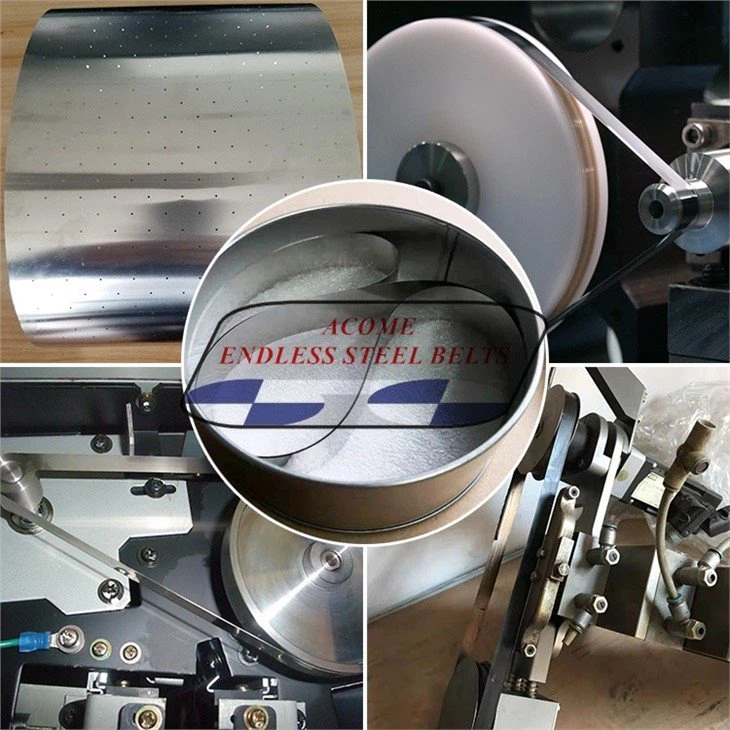

Another aspect is the need for proper maintenance. Although stainless steel is highly resistant to corrosion, regular cleaning and inspection are still necessary to ensure optimal performance. This includes removing any debris or contaminants that may accumulate on the belt surface, as well as checking for signs of wear or damage.
In conclusion, stainless steel belts can definitely be used in the glass - making industry. Their high - temperature resistance, precision, corrosion resistance, and flexibility make them a great choice for various applications in glass manufacturing. Whether it's for forming, annealing, or conveying, stainless steel belts can help improve the efficiency and quality of the glass - making process.
If you're in the glass - making industry and are looking for high - quality stainless steel belts, we'd love to hear from you. We can provide you with detailed information about our products and how they can meet your specific needs. Contact us for a consultation, and let's start a conversation about how our stainless steel belts can enhance your glass - making operations.
References
- Glass Manufacturing Handbook: A Comprehensive Guide to Glass Production Processes
- Stainless Steel Materials and Their Applications in High - Temperature Industries