

Can stainless steel belts be welded?
Jan 05, 2026
Yeah, I'm a supplier of stainless steel belts, and one question I get asked a lot is, "Can stainless steel belts be welded?" Well, let's dig into this topic and find out the deal.
First off, the short answer is yes, stainless steel belts can be welded. Stainless steel is a popular material for belts because it's tough, corrosion - resistant, and can handle various working conditions. But when it comes to welding, there are a bunch of factors to consider.
One of the key things is the type of stainless steel. There are different grades of stainless steel, like Austenitic, Ferritic, and Martensitic. Austenitic stainless steel, which includes the 300 series (e.g., 304 and 316), is generally the easiest to weld. It has good ductility and low susceptibility to cracking during the welding process. For example, if you're using austenitic stainless steel belts in food - processing industries where corrosion resistance is a must, welding them can be a breeze.
On the other hand, Ferritic stainless steels have a lower carbon content and are magnetic. They can be welded, but they are more prone to grain growth during the welding heat. This can lead to reduced ductility and toughness in the welded area. Martensitic stainless steels are even more challenging. They have high strength but are very sensitive to cracking during welding. Special pre - heating and post - welding heat treatment are often required to avoid these issues.
The welding process also plays a huge role. Some common welding methods for stainless steel belts are TIG (Tungsten Inert Gas) welding, MIG (Metal Inert Gas) welding, and resistance welding.
TIG welding is a great option for high - quality welds on stainless steel belts. It gives you precise control over the welding arc, which is crucial when working with thin - gauge stainless steel belts. The welds are clean, with minimal spatter, and the heat input can be carefully regulated to prevent warping. For instance, if you're making Ture Tracking Endless Steel Belts that need to have a smooth and accurate surface, TIG welding is a top choice.
MIG welding is faster but maybe a bit less precise compared to TIG. It uses a continuously fed wire electrode and an inert gas shield to protect the weld. It's suitable for thicker stainless steel belts where speed is more important than absolute precision. For example, when producing High Temperature Resistant Endless Steel Belts that are used in industrial heating applications and need to withstand high heat, MIG welding can get the job done efficiently.
Resistance welding is another option. It works by passing an electric current through the pieces to be joined, generating heat at the contact points. This method is very fast and can be automated for mass production. It's often used for welding stainless steel belts in applications where a strong, consistent joint is needed, such as in the manufacturing of Precision Endless Steel Belts.
However, welding stainless steel belts isn't all sunshine and rainbows. There are some potential problems. One is weld decay. This can happen in austenitic stainless steels when carbon precipitates at the grain boundaries during the welding process, leading to corrosion in the heat - affected zone. To prevent this, low - carbon grades of stainless steel or stabilized grades (e.g., 321 with titanium added) can be used.
Another issue is distortion. When the stainless steel belt is heated during welding, it expands, and then contracts as it cools. If not properly controlled, this can cause the belt to warp or twist. Pre - heating, using proper clamping techniques, and controlling the welding sequence can all help minimize distortion.
Surface contamination is also a big no - no. Grease, oil, or rust on the surface of the stainless steel belt can affect the quality of the weld. So, it's essential to clean the belt thoroughly before welding.
Now, let's talk about why you might want to weld stainless steel belts in the first place. One reason is to create endless belts. In many industrial applications, an endless belt is more efficient as it eliminates the need for joints that could cause problems during operation. For example, in conveyor systems, an endless stainless steel belt can provide a smooth and continuous surface for transporting goods.
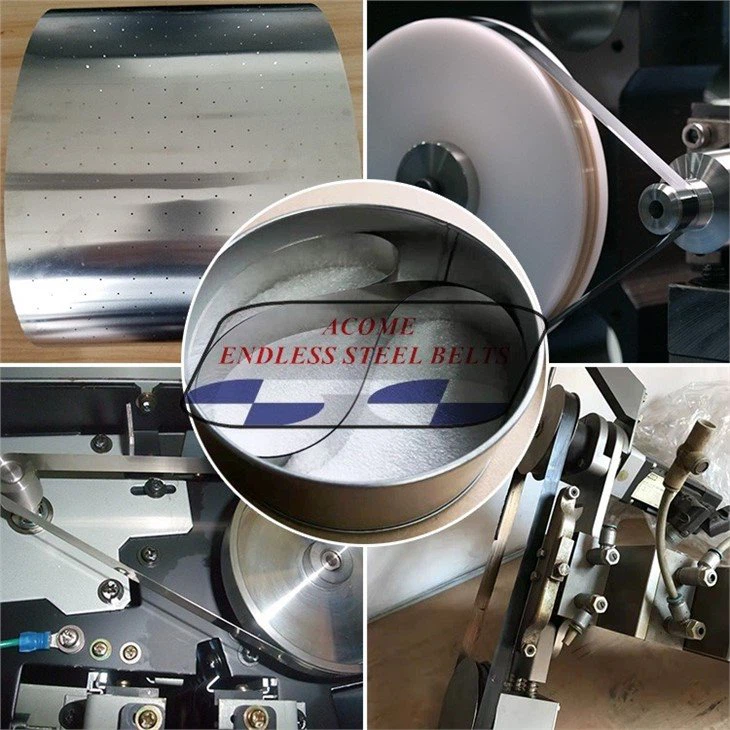

Welding can also be used to repair damaged stainless steel belts. Instead of replacing the whole belt, a skilled welder can fix small cracks or holes, saving you time and money.
In conclusion, if you've got a need for welded stainless steel belts, it's definitely doable. But you've got to understand the type of stainless steel you're working with, choose the right welding process, and take steps to avoid common problems.
As a supplier of stainless steel belts, I've got the knowledge and the products to help you out. Whether you need a specific grade of stainless steel for your welding project or advice on the best welding method, I'm here to assist. If you're interested in purchasing stainless steel belts for welding or any other application, don't hesitate to reach out. Let's have a chat and see how we can work together to meet your needs.
References
- ASM Handbook Volume 6: Welding, Brazing, and Soldering
- Welding Metallurgy of Stainless Steels by John C. Lippold and David J. Kotecki