

How to test the hardness of welded steel bands?
Jul 21, 2025
As a supplier of welded steel bands, ensuring the quality and performance of our products is of utmost importance. One crucial aspect of quality control is testing the hardness of welded steel bands. Hardness is a measure of a material's resistance to indentation, scratching, or deformation, and it plays a significant role in determining the durability and suitability of welded steel bands for various applications. In this blog post, I will discuss the importance of hardness testing, the different methods available, and how we conduct hardness testing to ensure the highest quality of our welded steel bands.
Importance of Hardness Testing
Hardness testing is essential for several reasons. First, it helps us determine the material properties of the welded steel bands. Different applications require different levels of hardness. For example, in applications where the steel bands are subjected to high levels of wear and tear, such as conveyor systems or industrial machinery, a higher hardness is often required to ensure long - term performance. On the other hand, in applications where flexibility is more important, a lower hardness may be more suitable.
Second, hardness testing is a key quality control measure. By testing the hardness of our welded steel bands, we can ensure that they meet the specified standards and customer requirements. It helps us identify any potential issues with the welding process or the base material, such as improper heat treatment or the presence of impurities, which could affect the hardness and overall performance of the product.
Different Methods of Hardness Testing
There are several methods available for testing the hardness of welded steel bands. Each method has its own advantages and limitations, and the choice of method depends on various factors, such as the size and shape of the sample, the required accuracy, and the type of steel used.
Rockwell Hardness Testing
The Rockwell hardness test is one of the most commonly used methods for testing the hardness of metals, including welded steel bands. In this test, a diamond cone or a hardened steel ball is pressed into the surface of the sample with a specified load. The depth of the indentation is then measured, and the hardness value is determined based on the relationship between the load and the depth of the indentation.
The Rockwell hardness test is relatively quick and easy to perform, and it provides a reliable measure of hardness. It is suitable for testing a wide range of steel hardness, from relatively soft steels to very hard steels. However, it has some limitations. For example, it requires a relatively large sample size, and the test results can be affected by the surface finish of the sample.

Brinell Hardness Testing
The Brinell hardness test involves pressing a hardened steel or tungsten carbide ball of a specified diameter into the surface of the sample with a known load. The diameter of the indentation left on the surface of the sample is then measured, and the hardness value is calculated using a formula based on the load and the diameter of the indentation.
The Brinell hardness test is suitable for testing materials with a relatively large grain size or a rough surface finish. It provides a more accurate measure of the average hardness of the material compared to some other methods. However, it is a more time - consuming test, and it requires a larger sample size and a more powerful testing machine.
Vickers Hardness Testing
The Vickers hardness test uses a square - based diamond pyramid indenter to make an indentation on the surface of the sample. A specified load is applied to the indenter, and the diagonal lengths of the resulting indentation are measured. The hardness value is then calculated based on the load and the area of the indentation.
The Vickers hardness test is highly accurate and can be used to test a wide range of materials, including very thin or small samples. It is particularly suitable for testing the hardness of welded joints, as it can provide detailed information about the hardness distribution across the weld and the heat - affected zone. However, it is a more complex and time - consuming test compared to the Rockwell and Brinell tests.
How We Conduct Hardness Testing at Our Company
At our company, we use a combination of these hardness testing methods to ensure the quality of our welded steel bands. Before the testing process, we carefully prepare the samples to ensure a smooth and clean surface, which is essential for accurate test results.
We typically start with a visual inspection of the welded steel bands to check for any obvious defects, such as cracks or uneven welds. Then, we select representative samples from each production batch for hardness testing.
For large - scale production, we often use the Rockwell hardness test as a quick and efficient quality control measure. It allows us to test a large number of samples in a relatively short time. If the Rockwell test indicates any potential issues or if more detailed information is required, we then use the Vickers or Brinell hardness test for further analysis.
In addition to testing the hardness of the welded steel bands, we also conduct other tests, such as tensile testing and microstructure analysis, to ensure the overall quality and performance of the product. These tests help us gain a comprehensive understanding of the material properties and identify any areas for improvement in the manufacturing process.
Our Product Range
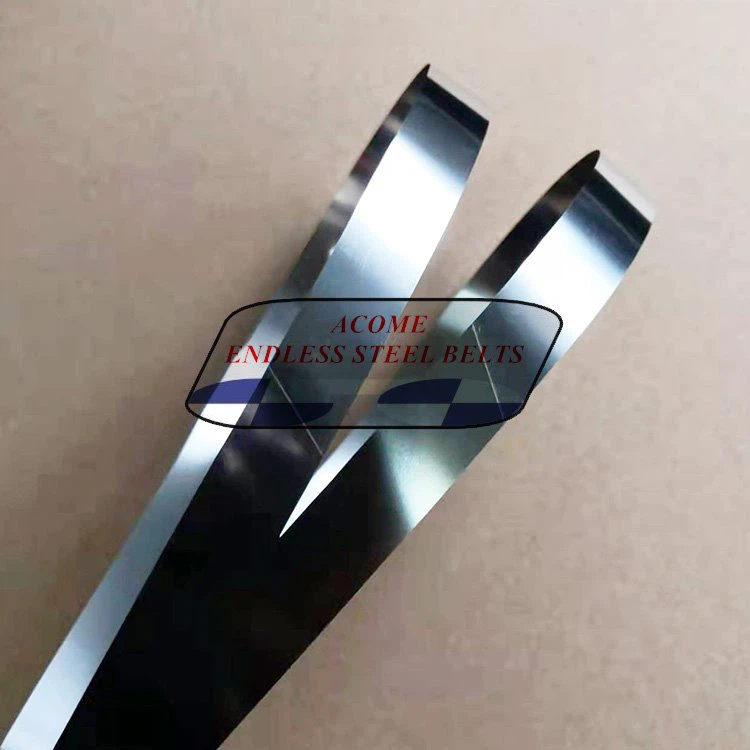
We offer a wide range of welded steel bands to meet the diverse needs of our customers. Our products include Welded Endless Steel Belts, Ture Tracking Endless Steel Belts, and Precision Endless Steel Belts. Each type of belt is designed and manufactured to meet specific requirements, and we ensure that the hardness and other properties of these belts are carefully controlled through our rigorous testing procedures.
Conclusion
Testing the hardness of welded steel bands is a critical step in ensuring their quality, performance, and suitability for various applications. By using a combination of different hardness testing methods and conducting comprehensive quality control measures, we can provide our customers with high - quality welded steel bands that meet their specific requirements.
If you are in the market for welded steel bands and have any questions about our products or the hardness testing process, please feel free to contact us. We are always ready to discuss your needs and provide you with the best solutions. Our team of experts is committed to delivering the highest level of customer service and ensuring your satisfaction with our products.
References
- ASTM International. "Standard Test Methods for Rockwell Hardness and Rockwell Superficial Hardness of Metallic Materials." ASTM E18 - 19.
- ASTM International. "Standard Test Method for Brinell Hardness of Metallic Materials." ASTM E10 - 18.
- ASTM International. "Standard Test Method for Vickers Hardness of Metallic Materials." ASTM E92 - 17.