

What is the hardness of precision steel belts?
Sep 09, 2025
Hey there! As a supplier of Precision Steel Belts, I often get asked about the hardness of these nifty products. So, I thought I'd take a few minutes to break it down for you.
First off, let's talk about what hardness actually means in the context of precision steel belts. Hardness is a measure of a material's resistance to deformation, particularly when it comes to indentation, scratching, or wear. In simple terms, a harder steel belt is less likely to get damaged or worn out quickly under normal operating conditions.
There are several factors that can influence the hardness of precision steel belts. One of the most important ones is the type of steel used. Different grades of steel have different chemical compositions, which can affect their hardness. For example, high-carbon steels tend to be harder than low-carbon steels because they contain more carbon atoms, which form hard carbide particles within the steel matrix.
Another factor that can impact hardness is the heat treatment process. Heat treatment involves heating the steel to a specific temperature and then cooling it at a controlled rate. This can change the microstructure of the steel, making it harder or softer depending on the desired properties. For instance, quenching and tempering is a common heat treatment process that can significantly increase the hardness of steel belts.
The manufacturing process also plays a role in determining the hardness of precision steel belts. For example, cold rolling is a process that involves passing the steel through a series of rollers at room temperature. This can increase the hardness of the steel by aligning the grains in the metal and increasing its density. On the other hand, hot rolling is done at high temperatures and can result in a softer, more ductile steel.
So, why is the hardness of precision steel belts so important? Well, it all comes down to performance and durability. A harder steel belt can withstand higher levels of stress and wear, making it ideal for applications that require long-term reliability. For example, in the food processing industry, precision steel belts are used to convey products along production lines. A hard belt can resist the abrasion caused by constant contact with food products and cleaning agents, ensuring a longer lifespan and less downtime for maintenance.

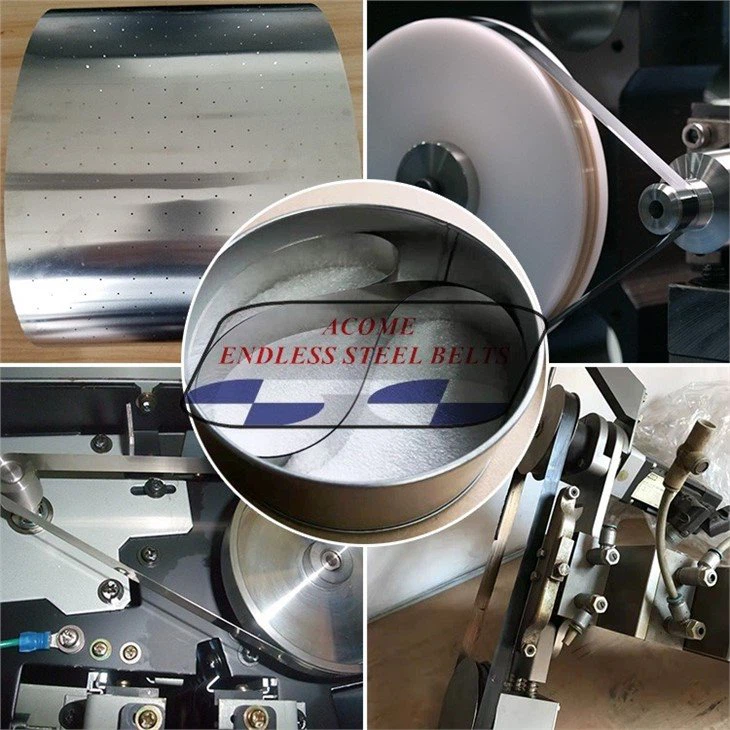
In the automotive industry, precision steel belts are used in engines and transmissions. A hard belt can handle the high pressures and temperatures generated by these components, providing smooth and efficient operation. Similarly, in the electronics industry, precision steel belts are used in manufacturing processes such as circuit board assembly. A hard belt can prevent damage to delicate electronic components during handling and transportation.
Now, let's take a look at some of the different types of precision steel belts we offer and how their hardness affects their performance.
Our High Temperature Resistant Endless Steel Belts are designed to withstand extreme temperatures without losing their hardness or strength. These belts are made from special high-temperature alloys and undergo a rigorous heat treatment process to ensure maximum performance. The high hardness of these belts allows them to maintain their shape and integrity even in the most demanding environments, such as in furnaces and ovens.
Our Precision Endless Steel Belts are known for their exceptional dimensional accuracy and smooth surface finish. These belts are made from high-quality steel and are carefully engineered to meet the strictest tolerances. The hardness of these belts is carefully controlled to ensure optimal performance in applications that require precise positioning and movement, such as in printing presses and CNC machines.
Our Ture Tracking Endless Steel Belts are designed to track accurately and consistently, even under heavy loads and high speeds. These belts are made from a special type of steel that has excellent wear resistance and low friction. The hardness of these belts is optimized to provide maximum traction and stability, ensuring smooth and reliable operation in applications such as conveyor systems and packaging machinery.
In conclusion, the hardness of precision steel belts is a critical factor that can significantly impact their performance and durability. By understanding the factors that influence hardness and choosing the right type of belt for your application, you can ensure that your equipment operates smoothly and efficiently for years to come.
If you're interested in learning more about our precision steel belts or have any questions about their hardness or performance, please don't hesitate to contact us. We'd be happy to help you find the perfect solution for your needs.
References
- "Metallurgy for Engineers" by George E. Dieter
- "Materials Science and Engineering: An Introduction" by William D. Callister Jr. and David G. Rethwisch
- "Handbook of Steel Manufacture" by George Krauss