

What is the compression strength of endless steel belts?
Oct 09, 2025
What is the compression strength of endless steel belts?
In the realm of industrial manufacturing, endless steel belts play a pivotal role in a wide array of applications. From conveyor systems in food processing plants to precision machinery in the electronics industry, these belts are lauded for their durability, reliability, and versatility. One of the key performance metrics that significantly influences their functionality is compression strength. As a leading supplier of endless steel belts, I am often asked about this critical property. In this blog post, I will delve into the concept of compression strength, its importance, and how it relates to our range of endless steel belts.
Understanding Compression Strength
Compression strength refers to the maximum amount of compressive stress that a material can withstand before it fails or undergoes permanent deformation. In the context of endless steel belts, it is the ability of the belt to resist being crushed or flattened when subjected to a load perpendicular to its surface. This property is crucial because in many applications, the belts are required to carry heavy loads or operate under high pressure conditions.
The compression strength of a steel belt is determined by several factors, including the type of steel used, its thickness, and the manufacturing process. High - quality steels with a fine grain structure generally exhibit better compression strength. Additionally, thicker belts tend to have higher compression capabilities compared to thinner ones. The manufacturing process, such as cold rolling and heat treatment, can also enhance the belt's mechanical properties, including its compression strength.
Importance of Compression Strength in Endless Steel Belts
The compression strength of an endless steel belt has a direct impact on its performance and longevity. In conveyor applications, for example, the belt needs to support the weight of the conveyed materials without sagging or deforming. If the compression strength is insufficient, the belt may start to buckle under the load, leading to uneven distribution of the materials, reduced conveyor efficiency, and even premature belt failure.
In precision manufacturing processes, such as those in the semiconductor industry, the compression strength is equally important. The belts are used to transport delicate components with high precision. Any deformation due to inadequate compression strength can result in misalignment of the components, leading to production errors and increased waste.
Moreover, in applications where the belt is in contact with rollers or other components under pressure, a high compression strength ensures that the belt maintains its shape and integrity. This helps to reduce wear and tear on both the belt and the associated components, thereby extending the service life of the entire system.
Compression Strength in Our Product Range
As a supplier of endless steel belts, we offer a diverse range of products to meet the varying needs of our customers. Our Precision Endless Steel Belts are designed for applications that require high - precision movement and excellent dimensional stability. These belts are made from high - grade steels and undergo a rigorous manufacturing process to ensure optimal compression strength. This allows them to maintain their shape and performance even under the most demanding conditions.

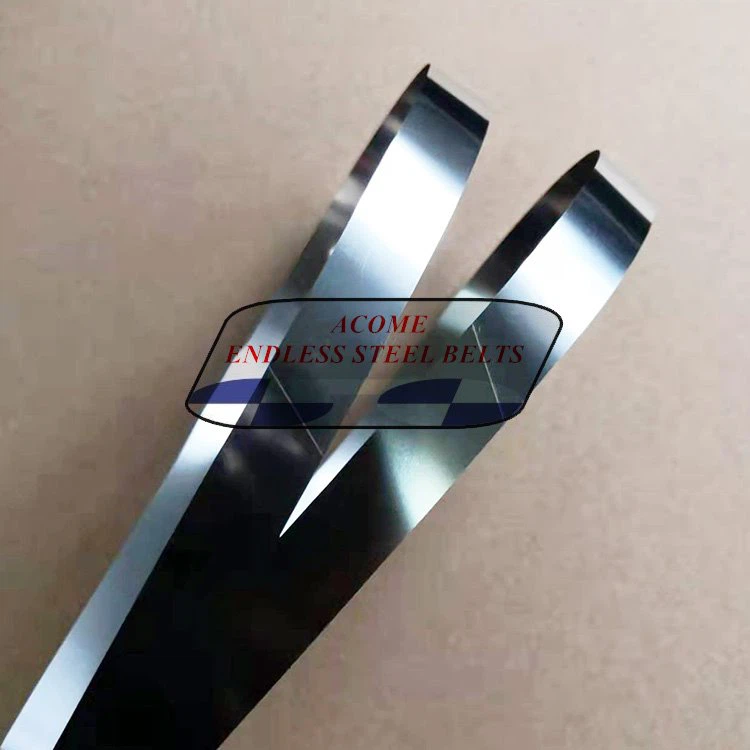
Our Ture Tracking Endless Steel Belts are engineered to provide accurate tracking and smooth operation. The compression strength of these belts is carefully calibrated to ensure that they can handle the loads associated with the tracking mechanism without deforming. This results in a more reliable and efficient conveyor system.
For applications that require a more cost - effective solution, our Welded Endless Steel Belts are an excellent choice. Despite their relatively lower cost, we ensure that these belts have sufficient compression strength to meet the basic requirements of most industrial applications. The welding process is optimized to maintain the integrity of the steel and enhance the belt's overall performance.
Measuring Compression Strength
To accurately assess the compression strength of our endless steel belts, we use a variety of testing methods. One of the most common methods is the flat - plate compression test. In this test, a sample of the belt is placed between two flat plates, and a gradually increasing load is applied perpendicular to the belt's surface. The load at which the belt starts to show signs of permanent deformation is recorded as the compression strength.
We also conduct dynamic compression tests, which simulate the real - world operating conditions of the belts. These tests involve subjecting the belt to cyclic loading and measuring its response over time. This helps us to understand how the belt will perform under continuous use and to identify any potential weaknesses in its compression capabilities.
Factors Affecting Compression Strength in Use
In addition to the inherent properties of the belt, several factors in the actual operating environment can affect its compression strength. Temperature is one such factor. High temperatures can cause the steel to soften, reducing its compression strength. On the other hand, extremely low temperatures can make the steel more brittle, also potentially compromising its compression performance.
The presence of contaminants, such as dust, dirt, or chemicals, can also have a negative impact on the compression strength. These contaminants can cause abrasion on the belt surface, leading to a reduction in its thickness and, consequently, its compression capabilities.
The alignment of the belt and the associated components is another critical factor. Misaligned rollers or pulleys can cause uneven loading on the belt, increasing the stress in certain areas and reducing its overall compression strength.
Optimizing Compression Strength for Your Application
To ensure that our customers get the best performance from our endless steel belts, we work closely with them to understand their specific application requirements. We take into account factors such as the load capacity, operating temperature, and environmental conditions. Based on this information, we recommend the most suitable type of belt, steel grade, and thickness to achieve the optimal compression strength.
We also provide technical support to our customers, including advice on belt installation, maintenance, and replacement. Proper installation and regular maintenance can help to preserve the belt's compression strength and extend its service life. For example, keeping the belt clean and properly lubricated can prevent the accumulation of contaminants and reduce wear.
Conclusion
The compression strength of endless steel belts is a crucial property that directly affects their performance and longevity in various industrial applications. As a supplier, we are committed to providing high - quality belts with excellent compression capabilities. Our Precision Endless Steel Belts, Ture Tracking Endless Steel Belts, and Welded Endless Steel Belts are designed to meet the diverse needs of our customers.
If you are in need of endless steel belts for your application and want to discuss the compression strength requirements in detail, we invite you to contact us for a consultation. Our team of experts is ready to assist you in selecting the most appropriate belt and ensuring its optimal performance in your system.
References
- ASM Handbook Volume 1: Properties and Selection: Irons, Steels, and High - Performance Alloys
- DIN 22101: Conveyor belts made of textile or rubber - General requirements and characteristics